cyber team simulations
29 Topics
Detecting Sliver - Team Sim
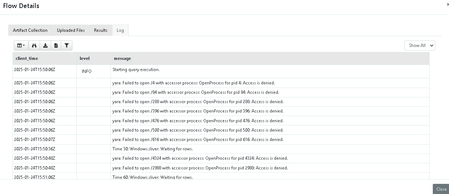
Hello, Cyber Team Sim - Detecting Sliver Following the Debrief/answers - I'm stuck on Answer 1. our velociraptor hunts are coming back as "access is denied" - limiting us to continue any further in the lab. It is run on the Analyst Windows machine. Wondering if you have any tips or tricks for us to grant access Best regards, MartinSolved700Views1like1CommentA Step-by-Step Guide to Hosting Your Own Hacktober Event
Organizing engaging, informative, and enjoyable cybersecurity events like Swisscom's Hacktober event doesn't have to be daunting. With strategic groundwork and relevant, interactive challenges, you can create a cybersecurity event that is both fun and educational. Are you considering hosting a similar cybersecurity event? This blog provides a step-by-step guide to creating an impactful event, resulting in a more skilled and prepared workforce.693Views8likes4Comments
Foundational Static Analysis: Analyzing Structures
The question is asking me "In the disassembly at address 00401567, what is the structure EDX is pointing to? Look at Microsoft Docs for help!" At the very end of the briefing they go over the explanation of how to identify which offset is determining which call. I am 90% positive that the offset we are supposed to be identifying in this case is 0x17c. However within this SAME blurb while they are explaining the way the stack line up they simply identify which API the offset in their example is pointing to. THEY NEVER MENTION HOW THEY GOT THERE! I am sure that it requires some research an I have been trying to identify anything within MSDN database but I can't find a single clue how identify what API 0x17c is pointing to. I have even tried looking up references for the offset they had 0x138 which they identified as STARTUPINFO. (I googled both terms together.) Now I am most definitely missing something here. I step within the assembly analysis mayb ebut I am at a loss. If anyone could help me out I would appreciate it.Solved500Views0likes6CommentsHow Swisscom Emphasizes Cybersecurity Through Engaging and Meaningful Learning Experience
In 2023, Swisscom’s Hacktober event brought together colleagues and partners from across Switzerland in a fun, engaging, and meaningful month-long learning experience that emphasized cybersecurity.459Views7likes2Comments
Help with Introduction to Python Scripting: Ep.7 – Demonstrate Your Skills
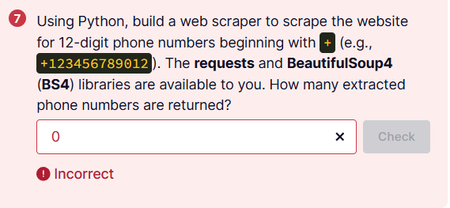
Hello all, I am stuck with the last question on this Immersive lab . Below is my question Using Python, build a web scraper to scrape the website for 12-digit phone numbers beginning with + (e.g., +123456789012). The requests and BeautifulSoup4 (BS4) libraries are available to you. How many extracted phone numbers are returned? I created the following python script import requests from bs4 import BeautifulSoup import re url = "http://10.102.35.108:4321" try: response = requests.get(url) response.raise_for_status() # Raise an exception for bad status codes except requests.exceptions.RequestException as e: print(f"Error fetching the page: {e}") exit() soup = BeautifulSoup(response.text, 'html.parser') phone_pattern = r"\+\d{12}" found_numbers = re.findall(phone_pattern, soup.get_text()) num_found = len(found_numbers) print(f"Found {num_found} phone numbers:") for number in found_numbers: print(number) The value is 0, but I am getting an incorrect solution. please helpSolved400Views1like6Comments
FIN7 Threat Hunting with Splunk: Ep.3 – Execution Logs
I am pulling my hair with this last question Rebuild the PowerShell script from the previous question using the three parts found in the PowerShell operational logs. What is the MD5 hash of this file? (The file should not contain any trailing white space or return characters) I ran index=* (EventCode=4104) | search "stager.ps1" AND "scriptblock" | table _raw and added the script content of files (1 of 3) (2 of 3) (3 of 3) to a new file. I removed the spaces and made sure they are glued together. I pasted the file in cyber chef with md5 selected and I keep getting the wrong hash. See a sample of the beginning and end of the 3 files This is just a sample below. I really don't know what else to do with this. $EncodedCompressedFile = @' 7b1pk+LKcjD83RH3P5y4cT/Y0ddusfXAfcMRT5U2JJCgBBJIDn8AAQIklmmgBfz6N7O00sCcnuuxH9vPUcRMo1qycqvMrFItfxmsgu3keHqf//avv/2fP//pH/5NiiJts9+9H//xz+H8fTuPatV/mUXRn//p u3rgE9+I/KPY62u+qTQuvp0Xqu3KPkEovj/867/++Z/+9A9/+oe/jFZbY7757V9/w1+96fpvf3NW78fTJCJRtPP/UfjrvxmT4/Lf//Y3Y3L+x79ML8f54V+6821wXP5VOFcEQfgn+FuDv/CnLnCY/za4HI7zzb9Yp+1xtZn/i7Y9zt93+8H8/WPlQ3Vj8n5YTiKAKe72lxToX4W/prj89aaVHEuOm/g+nxznwyX8mQFuRR38ja3//w== '@ $Decoded = [System.Convert]::FromBase64String($EncodedCompressedFile) $MemStream = New-Object System.IO.MemoryStream $MemStream.Write($Decoded, 0, $Decoded.Length) $MemStream.Seek(0,0) | Out-Null $CompressedStream = New-Object System.IO.Compression.DeflateStream($MemStream, [System.IO.Compression.CompressionMode]::Decompress) $StreamReader = New-Object System.IO.StreamReader($CompressedStream) $Output = $StreamReader.readtoend() $Output | IEXSolved392Views0likes1CommentThe Softer Side: Non-technical Benefits to Technical Team Exercises
In my role, I have the privilege of working with many different organizations through their technical exercise events and programs. One of the most rewarding aspects is seeing the spark ignite in the people as they band together to achieve a common objective. In this article, I’ll be sharing some of the common benefits I see emerge across organizations of all sizes, industries, and maturity levels, no matter the exercise's purpose. Encouraging curiosity and problem-solving Cyber Range Exercises provide a virtual network environment to explore. Defensive exercises focus on detecting and monitoring malicious activity, while offensive exercises involve exploiting vulnerabilities to uncover target information. Within these simulated environments, participants must utilize a wide array of skills and decide on the best approach, as the correct course of action isn't always obvious. This technical challenge is great for reinforcing knowledge and applying skills. I've seen players puzzle over unsuccessful methods, forcing them to rethink their approach entirely, asking plenty of “what if” questions before testing them out. This experimentation process educates players while simultaneously promoting lateral thinking and encourages sharing problem-solving insights. Improved communication Trawling through logs and analyzing (or preparing) a malicious payload usually calls for quiet focus. But in the real world, we’re rarely working alone. More often than not, investigations and tests happen in small teams, under pressure, and good communication becomes just as important as technical skill. That’s why team-based exercises reflect this reality. You’ve got to explain what you’re doing clearly, so everyone’s on the same page – both in terms of the situation and the technical jargon. Creating clear written logs and documentation matters too, especially in incidents where language may need to be adapted for different audiences. The most effective teams I've observed in these exercises prioritize organization. They set up a central place to track everything – whether that’s a Teams channel, a spreadsheet, or a crisis response tool – and they’re smart about assigning roles and carving out time to keep everyone synced up. Better distraction management A deliberate challenge I sometimes incorporate into technical exercises is surprise leadership requests for incident updates. This tests the team's ability to rapidly consolidate information under pressure, dealing with the uncertainties of an active investigation. Teams with strong organization, detailed incident logs, and a dedicated spokesperson or team leader consistently manage these interruptions best. Practicing in a simulated setting helps teams stay productive and accurate, even when real-world distractions come into play. It builds the ability to block out noise, manage stakeholders, stay focused on individual tasks while keeping sight of team goals, and smoothly switch contexts when needed. Stronger team dynamics Unlike individual training, these exercises require participants to actively communicate, share knowledge, and rely on each other's strengths to achieve a common goal. Team members learn to understand each other's working styles, identify individual expertise, and build trust in their colleagues' abilities. The shared experience of overcoming technical challenges, even simulated ones, creates a sense of camaraderie and shared accomplishment. While every team comprises diverse personalities and communication styles, it's crucial that each individual feels comfortable and empowered to share their insights and findings. These contributions can significantly alter the outcome; for instance, a critical discovery during a technical investigation might directly influence the business's crisis response strategy. Increased efficiency The more a team works together responding to the exercise challenges, the more they develop shared understandings of processes and expectations, learn to delegate effectively, and identify bottlenecks in their collaborative efforts. Eliminating issues arising from a lack of confidence or familiarity with the team or processes is especially critical for incident response teams, leading to quicker response times and improved agility when situations change rapidly. After each exercise, I like to conduct a team debrief, which is crucial for reflecting on lessons learned. Prompting players to consider their individual strengths and challenges, alongside open discussion about team dynamics and processes, helps identify opportunities for improvement. Technical exercises are undoubtedly key to boosting individual technical proficiency. However, their even greater value lies in cultivating these skills alongside the crucial professional attributes demanded by our field. Considering the significant pressure and expectations placed on these teams to deliver trustworthy outcomes, ensuring their preparedness within a high-trust setting is essential. These are merely some of the advantages I've witnessed through these exercises. Share your thoughts What benefits have you experienced through technical exercising? Share your thoughts in the comments!391Views2likes1CommentNew Team Sim Content: (Defensive) Operation Vulpes
Operation Vulpes is a defensive scenario and marks a return of using Splunk as the SIEM solution. This scenario sees Orchid Corporation reeling from the aftermath of a ransomware attack. Defenders will need to determine the attacker's path to compromise and infect the network and use information provided by a law enforcement agency to attempt to recover files. Users will need to use a variety of tools and defensive disciplines to solve the scenario – not just the SIEM solution. This sim also utilizes our new user noise generation framework to simulate user web browsing activity on end-user devices. This spawns the Edge browser as a domain user and visits internal and external websites to add additional noise to logs collected by Splunk. Why have we created this content? This Team Sim adds a level of complexity and realism by introducing actual ransomware. So you and your teams can exercise and prepare for the worst-case scenario. (Please be aware that Immersive Labs created the ransomware for exercise purposes only and includes failsafes to control its execution.) In addition, the sim uses popular tools within security stacks, so the simulation is true to life. What are we publishing? A new Team Sim exercise, Operation Vulpes, which will be viewable in the Team Sim catalog for all Team Sim customers. Who is this content for? This Team Sim is primarily focused on testing the defensive and technical capabilities of the following roles: SOC analysts Incident responders Threat hunters Check it out now!342Views2likes0Comments5 Pro Tips for Organizing an Effective Team Sim
While scheduling a Team Sim exercise in the Immersive Labs platform is very straightforward, I’m sharing a list of recommendations and tips for making sure your exercise goes the extra mile: 1. Define exercise objectives Know the purpose of the exercise to keep a laser focus and stop scope creep, which can dilute the exercise experience and learning takeaways. Is this a fun exercise that will encourage engagement, or is it a capability assurance exercise? Knowing your objective is essential for effective planning. For example, a fun exercise might include more guidance and hints than a capability assurance exercise. 2. Block out calendars in advance Identify your participant list as early as possible and send placeholders out to ensure the team’s availability. The more advance notice, the better. At a minimum, provide two weeks’ notice, but ideally one month. In some large-scale cases, whole Team Sim exercise programs are planned and booked out over six months in advance. 3. Host a briefing session These sessions provide a great chance to set the expectations and objectives of the exercise, communicate important exercise information, answer any questions, and, most importantly, get the team excited about it! We recommend organizing a briefing call the week before the exercise. 4. Run a systems test The last thing you’ll want to deal with when your exercise launches is any dreaded technical issues. Make sure you run a systems test early in the planning stages, leaving plenty of time for your organization to make any required configuration changes. You can find system requirement details here. 5. Assign preparation labs Some of the catalog exercises may use security tools unfamiliar to your organization. I believe in the benefits of vendor-agnostic learning when it comes to skills development, but understand that unfamiliar tools can be frustrating. If you have access to our hands-on labs, there are preparation labs available tailored for each catalog exercise. Assign these to participants a minimum of two weeks before the exercise. If you need any help or support with planning, ask a question in our Help and Support forum. Following these steps ensures clear expectations from your participants and a smooth lead-up to your exercise, which plays a big factor in making it a success! Do you have any hints or tips for other exercise planners and facilitators? What lessons have you learned, or where have you seen success? Let us know in the comments below.337Views4likes6Comments