artificial intelligence
27 Topics(Ghost) Busting Cybersecurity Myths: Separating Fact from Fiction
The cybersecurity landscape is crowded with half-truths. Compliance checkboxes feel like the finish line. Traditional defenses seem obsolete now that AI is everywhere. Pre-trained models are safe, right? The pressure to move fast often means settling for the easy answer—and that's exactly where the myths take hold. Container 7, Immersive’s research and intelligence division, is launching Cyber Awareness Month with a candid expert panel. Join panelists Robert Klentzeris and Naomi Roberts, moderated by Kev Breen, as they challenge the assumptions putting organizations at risk, bust the myths slowing down your security team, and examine the practices that actually deliver resilience. We'll Discuss: Security certifications as a starting point, not the destination The persistence of traditional defenses in an AI-driven world Strategic vs. hype-driven AI deployment Governance and control for autonomous agents Emerging threats and evolving threat models4Views0likes0CommentsCybersecurity Awareness Month at Immersive
Welcome to Cybersecurity Awareness Month! October is your annual opportunity to pause, benchmark your security skills, and level up your defenses against an increasingly dynamic threat landscape. This year, our primary focus is on improving AI security & resilience across your workforce. As artificial intelligence transitions from an emerging technology into core business infrastructure, it introduces both incredible efficiency and novel security risks. Whether you are defending against frontier-model-enabled threats, securing automated enterprise pipelines, or guarding against human-centric identity attacks, true resilience requires hands-on training—not just passive learning. Join us throughout October in the Immersive platform to jump into hands-on challenges, test your skills in live crisis simulations, and tune in to interactive expert events designed to help you tackle modern cyber threats head-on. Labs & Challenges 🧪 The Hex Files (Earn a digital community badge if completed by Nov 9th!) Track down and stop the Pointy Hat Society—a coven of witches-turned-hackers—through a brand new program combining both hands-on labs and single-player Crisis Sim scenarios that reinforce safer security hygiene. Then test what you’ve learned in two of our most popular challenge labs. Lab Collections: The Hex Files: Coven Up The Hex Files: Witchy Waters Crisis Sims: The Hex Files: A Brew-tal Breach The Hex Files: The Nightshade Incident AI Security & Resilience Pathways 🤖 To help organizations build workforce resilience at scale, managers can assign any of the following 5 structured programs directly to their teams: Foundational AI Literacy and Safe AI Adoption — Understand what AI tools are, how they are driving business value, and how to safely adopt them in your daily workflows. Protecting Against Frontier-Model-Enabled Threats — Learn how frontier models like Mythos accelerate threat actor workflows and sharpen your defensive capabilities against AI-driven risks. AI Purple Teaming (Blue Team) — Bridge traditional incident response into AI-specific risks, specialized telemetry, and adversary behaviors in collaborative exercises. AI Purple Teaming (Red Team) — Build practical confidence targeting AI-specific attack surfaces, finding model vulnerabilities, and translating findings into better defenses. Scattered Spider Threat Actor Defense — Master techniques to detect social engineering, identity compromise, and lateral movement typical of Scattered Spider operations. Events & Webinars 📅 Mark your calendars for our live events and interactive sessions throughout the month: [Roadmap Webinar] The Evolution of Immersive One: Proving AI Readiness Across Your Enterprise Date & Time: Thursday, 8 October 2026 | 10:00 am EST / 3:00 pm BST Overview: Discover how to turn AI adoption into proven enterprise readiness with insights on our closed-loop resilience engine, the agentic frontier, and an exclusive sneak peek at our Q4 product roadmap. [Webinar] (Ghost) Busting Cybersecurity Myths: Separating Fact from Fiction Date & Time: Monday, 19 October 2026 | 10:00 am ET / 3:00 pm BST Overview: Join Container 7 experts as they debunk common cybersecurity myths, evaluate AI risks, and uncover practical strategies to build true organizational resilience. [Virtual Crisis Sim LIVE] The Return of the Puppetmaster: No Strings Attached Date & Time: Friday, 30 October 2026 | 10:00 am EST / 3:00 pm BST Overview: Put your crisis management team through a high-pressure live simulation tackling leaked enterprise credentials, insider threats, deepfakes, and rogue AI defense agents. Cyber Resilience Awards 2026 🏆 Keep your eyes peeled right here in the community and across our social channels during the final week of Cybersecurity Awareness Month! We will be announcing the winners of the Cyber Resilience Awards 2026, celebrating the individuals and organizations operating at the absolute cutting edge of cyber and AI resilience. Stay tuned to see who takes home top honors!154Views1like2CommentsIris C2Agent: hunting malware that hands control to an AI model
A look at a new LLM-operated Windows implant, what it leaves behind, and how to investigate it. By the Container 7 Team Most implants wait for an operator to send commands. Iris, also tracked as C2Agent, waits for a goal. The operator types something like "get the administrator's password" and an AI model takes it from there, choosing each command, reading the output and deciding what to do next. If you defend Windows endpoints in an organization that uses AI tools, this one's worth your time. What's happening Iris is a Windows implant written in Go. It was first seen on September 10, 2026, and Palo Alto Networks' Unit 42 documented it in October 2026. Its design is unusual. The operator doesn't send a script or a list of commands. They send a plain-language objective, and the implant hands interactive control of the host to a large language model (LLM). The model works in a loop. It runs a command, reads the result and picks the next step. The family has moved fast. Unit 42 tracked 32 samples across eight major versions in 29 days. Newer versions can hijack AI developer tools already installed on the victim's machine and abuse legitimate commercial AI services to carry out their work. Unit 42 also describes it as the first documented implant to act as a Model Context Protocol (MCP) client, which lets it add new tool connections at runtime. Why it matters Iris changes two things defenders rely on. First, there's no fixed playbook. A traditional implant repeats the same tasks in the same order, which gives you a pattern to detect. With a model in control, the sequence of commands can shift from one run to the next, even when the goal stays the same. Second, it hides in traffic you've probably already approved. Most organizations allow AI services out of the network because their developers and analysts use them every day. When the malware calls those same services, or drives an AI tool that's already installed, malicious requests sit next to legitimate ones. Your AI egress policy now affects how much you can see. There's also an upside for defenders. A model that reasons step by step can leave a record of that reasoning. If you can find it, you can see what the attacker asked for and what the model tried to do. What to look for No single signature covers every version, so hunt for behavior. Start with these questions: Process lineage: Are AI developer tools or command-line assistants being launched by unexpected parent processes, or running commands nobody on the team asked for? AI egress: Which hosts talk to commercial AI services, and do those hosts have a business reason to? Look for AI traffic from servers or accounts that don't normally use it. Command cadence: Look for bursts of reconnaissance and credential-access commands with short, regular gaps between them, as if each one waited for the last result. On-disk artifacts: Watch for new configuration, prompt or "skill" files appearing alongside unfamiliar binaries in user-writable folders. Recorded reasoning: Where you can find the model's output, compare what it planned with what the host logs say actually ran. Get hands-on The Iris C2Agent Log Analysis lab puts you in the defender's seat. Working in Elastic, you'll investigate a Windows host where Iris was executed and tasked by a remote operator. You'll recover the artifacts it left on disk and on the network, then read the model's own recorded reasoning to separate what the attacker intended from what actually happened on the host. By the end, you'll know the indicators of compromise (IOCs) this family leaves behind. The lab is built for security analysts, incident responders, threat hunters, and detection engineers who monitor Windows estates. It also suits anyone working out how allowing AI traffic changes their attack surface. It's the first of our releases on Iris. A Cyber Range Exercise is in the works, so watch this space. Start the lab: http://immersivelabs.online/labs/hunting-the-tools-iris-c2agent-log-analysis13Views0likes0CommentsSecurity at the Speed of AI: Cyber Resilience and the New Security Operating Model
AI adoption is accelerating across the enterprise at lightning speed. But moving fast and getting it right are entirely different concepts. As business teams independently embrace generative tools and developers leverage copilots, security teams face a critical challenge: how to scale AI without losing control, expanding the attack surface or blowing through budgets. For cybersecurity teams, the stakes are especially high. AI can help defenders operate faster and at greater scale, but it also raises critical questions: how do we regain visibility into Shadow AI? How do we validate AI-assisted code before it hits production? And how do we control the exploding cost and logic limits of autonomous AI agents? Join Immersive leaders James Hadley and Aniket Menon, along with guest speaker Forrester Principal Analyst Jess Burn, for an interactive discussion and live platform demo on what it takes to build a security organization ready for an AI-driven future. Attendees will come away with: A framework for Shadow AI & Workforce Governance: How to tackle well-meaning vs. deliberate shadow AI use with real-time, browser-based upskilling. Strategies for the "Vibe Coding" Era: Managing structural lifecycle risks when "everyone becomes a developer" using AI copilots. A clearer view of Token Economics & Agent Assurance: How to benchmark autonomous AI agents (like GPT-4 and Opus 5), validate logic limits, and prevent spiraling token costs. Live Product Demos: Hands-on walkthroughs of engineering sandboxes, agent testing harnesses, and board-ready resilience evidence.42Views0likes0CommentsIt's Software, Not Magic: Navigating the Vulnerability Speed Wave and Shadow AI
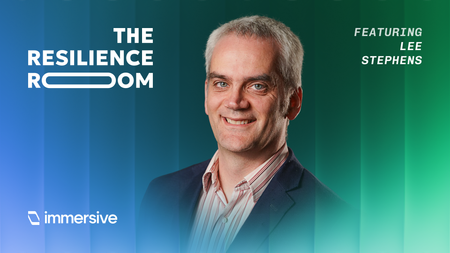
🎧 Listen now to The Resilience Room What does a 31-year career at one company look like in cybersecurity? For Lee Stephens, it looks like research, marketing, sales, operations, and consultancy — and never a dull moment. In this episode of The Resilience Room, Lee sat down with host Sam Dickison to cut through the noise on ransomware, the collapsing patch window, Shadow AI, and the looming quantum reckoning. The Retail Ransomware Wake-Up Call Last year's wave of attacks on the UK retail sector made cybersecurity front-page news. For Lee, the most striking thing wasn't the sophistication of the attacks — it was the opposite. "What came home was actually the simplicity of the attacks. Those really fundamental, boring basics are absolutely critical — and involved in so many of the incidents we deal with." While the media spotlight has moved on to AI, the threat landscape hasn't changed nearly as much as the news cycle suggests. The fundamentals remain the same: strong unique passwords, kept systems, tested backups, and a plan for a bad day. As Lee puts it, you don't need to outrun the bear — just don't be the slowest runner. The Vulnerability Speed Wave: Your 90-Day Patch Window Is Gone Here's the stat that should reframe every conversation about patch management: 2021: Average time from CVE disclosure to active exploit — one year 2025: Shrunk to one month 2026: Now at one week and one day 2027 projection: Potentially an hour — or a minute This geometric progression is being driven by AI-assisted vulnerability research on both sides. The traditional 90-day patch window is functionally dead, and some vendors are already moving to fortnightly cycles. Speed is now a security control in its own right. AI in the SOC: Real Benefits, Realistic Limits SOC analyst burnout is real. The volume of alerts, the repetitive triage work — AI-assisted automation has genuine potential to help. But fully autonomous SOCs? Lee remains cautious. "At times AI feels like magic. It's not magic, it's software. And from thirty years ago when I did my computer science degree: garbage in, garbage out." His recommendation: don't chase the ten-times transformation. Chase the ten percent improvement and compound it. Organisations that have tried to automate everything often find they're spending more time maintaining automations than the work would have taken. Shadow AI: The New Shadow IT Problem Most people using unofficial AI tools aren't being malicious — they're trying to get their job done. But the risk is real, especially around feeding confidential data into models without proper data handling agreements. Some of Lee's clients require all data to remain in the UK at all times, which effectively rules out certain major tools that can't guarantee that under peak load. His cautionary scenario: a team uses AI to diagnose an infrastructure problem. The output gets translated for customers, then condensed for a senior exec. Each iteration drifts further from reality — and when the fix doesn't work, multiple conflicting versions of "the truth" are already in circulation. "AI has no conscience, it doesn't care. It's a prediction engine. It's software. Not magic — software." The solution is culture and training as much as technical controls, combined with IT teams designing better corporate solutions so people don't need to go off-piste in the first place. What's Next: Quantum's Y2K Moment Quantum computing has been "just five years away" for decades — but the trend lines are genuinely moving. More qubits, better coherence times, major advances every few months. The security implication is stark: the maths underpinning asymmetric encryption is trivially easy for a quantum computer to solve, which means every piece of encryption on the planet eventually needs replacing. NIST has published post-quantum cryptography standards, and vendors are beginning to implement them. But the migration is a massive undertaking. "It's akin to a Y2K moment where everybody needs to upgrade — for really no benefit at all, just to stay standard. The only disadvantage is we don't know when the moment is." The organisations best placed will be the ones who've already done their cryptographic inventory and know what they'd need to upgrade and in what order. Whether the topic is ransomware, patch windows, AI, or quantum — Lee's message is consistent: there's no silver bullet, no magic. Just fundamentals, applied consistently, with humans staying in the loop. After 31 years, it's the message that keeps working. The Resilience Room is hosted by Sam Dickison. New episodes explore the human and technical realities of cybersecurity with guests from across the industry.68Views0likes0CommentsThe Black Belt of Cybersecurity: What a Former Military Pilot Turned SecOps Leader Knows About Surviving the Chaos
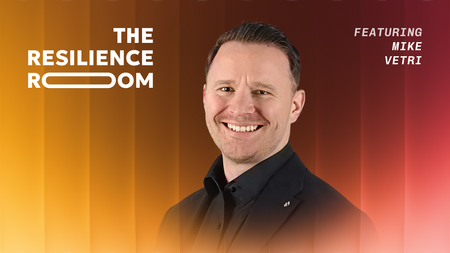
🎧 Listen now to The Resilience Room In 2012, a young Air Force officer named Michael Vetri walked out of his commanding officer's office having just been told his career was about to change forever. He'd trained as a pilot. Now he was being reclassified into a field almost nobody in the room understood. "I'm so sorry you were reclassified into cyber," his flight instructor told him. "If you need someone to talk to, let me know." That's not a joke. That's how misunderstood cybersecurity was fourteen years ago — obscure enough that getting assigned to it sounded like a consolation prize, or worse, a diagnosis. Fast forward to today, and that reluctant recruit is Senior Director of SecOps at a SaaS company serving the biopharma industry, a black belt Krav Maga instructor, and — going by the enthusiasm with which he brought up Assassin's Creed unprompted — a certified nerd in the best sense of the word. Mike sat down on The Resilience Room and covered a lot of ground: emotional intelligence as a revenue driver, the four things that keep security teams from burning out, why AI is currently winning the fight, and how disarming a training knife in a Krav Maga studio taught him more about incident response than most corporate leadership seminars ever did. If you work in this field, several of these are going to land uncomfortably close to home. Good. That's the point. Empathy isn't a soft skill. It's a spreadsheet line item. Mike leads with rank, but not with authority — a distinction the military drilled into him early. "In the civilian world, you can't just say, 'I'm a captain, you're an NCO, you'll do what I say.' No — it's a lot more influential leadership, invoking those empathetic muscles more." He points to a Harvard Business Review study of 189 companies that measured how deeply organizations embedded emotional intelligence principles — self-awareness, self-regulation, empathy, motivation — into their culture. The companies that did it well beat their revenue targets by roughly 20% year over year. The companies that didn't, missed by about the same margin. For an industry that still occasionally treats "soft skills" as a nice-to-have bolted onto technical competence, that's a hard number worth sitting with — especially if your last performance review mentioned "communication" in a slightly ominous tone. The four pillars that keep security teams from quitting Burnout in cybersecurity isn't news to anyone reading this. But Mike's framework for fighting it is refreshingly concrete. He tells every team he leads that people will stay if you give them four things — not in excess, just in moderation: Time. If someone's been grinding through late nights, notice. Let them come in later. Build in recovery. Money. Pay fairly for what they contribute — full stop. Recognition. Not just for wins. How you handle underperformance, professionally and without ambush, matters just as much. Development. Give people room to grow into who they're becoming, not just who they were hired to be. One detail worth stealing: when an underperformance conversation is looming, Mike doesn't open with the problem. He opens with "how are you doing? Everything okay outside of work?" — asked more than once if needed. People under pressure, especially newer employees still trying to prove themselves, often won't volunteer that something's wrong. They'll white-knuckle through it instead. A little space to be asked, rather than told, changes what people are willing to say. During one incident that dragged on for months, Mike built a shift schedule with staggered four-hour windows so his team could claw back rest without falling behind. He also borrowed a page from Air Force operational risk models: a short questionnaire — how much sleep did you get, how many consecutive night shifts, how long since you've touched this system — that produces a risk score. Score too high, and you talk to a duty officer before you're cleared to keep going. It's the kind of instrumented self-check most SOCs could use and almost none have. Be the eye of the hurricane Ask any incident responder what makes a bad night worse, and it's rarely the incident itself. It's the Slack DMs. The "hey, what's going on?" pings stacking up while you're still trying to pull logs. Mike's answer is to act as an umbrella for his team — absorbing pressure from above so the people doing the actual work can think. That starts with managing expectations upward immediately: this is fresh, I'm still learning it, I'll update you in an hour. One sentence, enormous operational space. It tells leadership "I've got this" while telling the incident team "go dark and go deep." Underneath that is a military framework Mike leans on constantly: the OODA loop — Observe, Orient, Decide, Act. In a live incident, the goal is to move through that loop faster than whatever you're up against. The moment you get stuck in "orient," unable to commit to a decision, you've lost the initiative. Everything else — the calm voice, the reassurance, the "breathe, I've got your cover" — exists to keep the team moving through the loop instead of freezing in it. And underneath that is the least glamorous ingredient of all: reps. "You wouldn't want a surgeon who hasn't performed one in three or four months operating on you," Mike says. Tabletop exercises, drilled relentlessly, are what makes calm possible when the real thing hits. AI is winning the speed war — for now This is where the conversation gets genuinely unsettling, in the way only a good SOC-lead story can. Mike cited threat intel research his own team pulled showing that traditional, manually written phishing emails land at about a 12% click rate. AI-generated phishing is landing at 54%. That's not an incremental shift — it's a different category of threat. His framing borrows from military history: "Just like the English were doing great with their longbowmen until they were met with cannons — we're doing great against traditional malware, traditional phishing, until we're met with AI-based malware, AI-based phishing." He pointed to Phantom Raven as a case study in the new normal — a highly polymorphic strain that reshuffles its own hash and callback domains the moment defenders try to contain it, sometimes riding in through a malformed open-source package nobody scrutinized closely enough. Mike's answer isn't to out-human the machines — it's to fight AI with AI, using it to accelerate investigation and triage so humans can make faster calls. But he draws a firm line at execution: "I still think it's a bad idea to let AI execute actions on your security stack." Not because it can't make good calls, but because when it's wrong, it's wrong at machine speed — locking down a developer's test script as if it were a live threat and taking a production deploy down with it. Assessment and evaluation, yes. Pulling the trigger, not yet — not until AI has earned the trust that comes from track record, the same way a junior analyst earns it. He's also thinking about a subtler insider-risk problem taking shape as advanced AI systems move into more sensitive testing and evaluation programs. His concern isn't the technology itself — it's what happens when knowledge of where that technology lives becomes valuable enough to bribe someone for. New capability, same old human vulnerability. Train at black belt level, or don't bother training at all Mike's been doing Krav Maga since a college roommate walked in mid-Assassin's Creed session and told him the game's weapon disarms were based on a real martial art taught nearby. He put the controller down, went and checked it out, and got hooked on his very first class — which happened to be weapon disarming. He made it to black belt in 2014, taught for years, and — genuinely one of the better anecdotes on the episode — met his wife through a self-defense class he was running as a side gig at New Mexico State. Her kicks, he reports, had "so much pepper behind them." The parallel he draws to cybersecurity is the episode's sharpest idea: you're only prepared to handle the level you've actually trained for. A yellow belt can handle a yellow belt. Theoretically, maybe an orange. Train your team only against script kiddies and spray-and-pray attackers, and script kiddies and spray-and-pray attackers are all you'll ever be ready for. The nation-state actor doesn't care what belt is hanging in your dojo. It shows up in the small stuff too — like treating every incident, however minor, as if you might have to defend your handling of it in court one day. Heavily documented, no matter how low-level it looks. "Don't give the opposing attorneys any reason to pierce your veil," as Mike puts it. Complacency doesn't announce itself. It just quietly lowers the belt you're actually prepared to fight at. The throughline of this whole conversation is one Mike states almost in passing but clearly means as a core operating principle: technical skill gets you in the room, but judgment, empathy, and relentless preparation are what keep your team — and your organization — standing when things go sideways. AI is changing the speed of the fight. It isn't changing who has to decide what to do about it. Catch the full conversation with Mike Vetri on The Resilience Room – available on most podcast platforms.125Views0likes0CommentsThe Cyber Proving Ground for the AI Enterprise
How to prove organizations can adopt AI safely, teams can defend at AI speed, and executives can lead through crisis. This shift introduces a critical challenge: business functions are independently spinning up AI applications without central visibility, while defenders face compressed, machine-speed attack paths. Security leaders can no longer rely on guesswork, blind faith, or static compliance checks. Join Immersive Founder James Hadley and Chief Product Officer Aniket Menon for a look at how organizations can fundamentally transform security from an innovation bottleneck into a true business enabler. We’ll cover how to: Prove AI can be adopted safely: How to reduce the blind spots created by rapid AI adoption, validate role-specific AI readiness, and connect AI access to evidence through integration points with identity providers such as Microsoft Entra ID, Active Directory and Okta. Prove teams can defend at AI speed: How live-fire exercising, technical ranges and AI-specific scenarios help SOC and IR teams rehearse compressed attack paths, AI-enabled threats and high-pressure response workflows. Prove leaders can lead through crisis: How crisis simulations and after-action evidence help executive teams rehearse governance, escalation, communication and decision-making before AI risk becomes operational, public or regulatory. Get a look at how capabilities including AI Knowledge Pass, Agentic SOC & IR, and AI Agentic Harness help organizations scale safe AI adoption and evaluate agentic security workflows in controlled conditions. AI is moving. Prove your business can move with it.58Views0likes0CommentsZero-Day Summer: The Mythos Fallout and the Era of Autonomous Attacks
In January, organizations were warned: 2026 would be the year AI transitioned from a script assistant to a sovereign attacker. Midway through the year, that forecast has proven conservative. We have entered an era of autonomous exploitation. The first half of 2026 has been defined by the collapse of the "vulnerability window" and the rise of AI-orchestrated data exfiltration events affecting millions of records in a single afternoon. Coordinated global campaigns are now compromising hundreds of network perimeters in minutes, not weeks, leaving traditional human-led defenses obsolete. As the fallout from the Mythos model preview sends shockwaves through the organization, leaders must move beyond observation to aggressive, evidence-based resilience. Join Immersive’s lead intelligence architects for a clear-eyed look at the state of AI-enabled threats and the evolution of the 2026 threat landscape. We will move past the hype to deliver the actionable intelligence required to defend an enterprise under autonomous assault. What We’ll Confront: The Mythos Aftermath: An analysis of the first "sovereign" discovery model. Understand how tools capable of autonomous zero-day identification have fundamentally broken the traditional patching cycle. Quantum’s SNDL & The Regulatory Timebomb: Why the surge in encrypted data exfiltration, targeting "store now, decrypt later" (SNDL) outcomes, represents an immediate legal and financial risk to the organization. The Rise of the AI-Orchestrated Actor: An uncompromising look at campaigns where human operators have been replaced by AI agents for reconnaissance, lateral movement, and automated ransom negotiations. From Pulse to Proof: The 2026 mid-year roadmap for shifting from manual playbooks to autonomous-ready response through high-fidelity, dynamic exercises.46Views0likes0CommentsWebinar: Activate Your Secure AI Strategy with Immersive One (In Under 30 Minutes)
AI threats won’t wait. To securely adopt AI, you need a unified front where Engineering innovates, Security defends, and your workforce governs. But using new tools is only half the battle; cyber resilience today requires an AI-ready workforce that can move as fast as the models themselves. Join our expert-led session where you’ll discover (in less than 30 minutes!) how Immersive One supports role-specific enablement, so you can activate safe, rapid, AI innovation and govern adoption. You’ll walk away ready to use Immersive One to: Enforce your AI development lifecycle to satisfy global regulatory and security standards. Secure your AI agents' identities, roles, and outputs, and evaluate their performance to mitigate risk. Build internal AI proficiency to solve the talent bottleneck and keep pace with an ever-evolving threat landscape. Don’t miss this opportunity—Immersive One’s Secure AI capability ensures governance can be a catalyst for secure innovation.63Views0likes0CommentsNew CTI Lab: CVE-2026-23744 (MCPJam RCE): Offensive
On January 16, 2026, advisories were released covering a critical vulnerability in MCPJam Inspector, the local-first development platform for MCP servers. The Latest version, 1.4.2 and earlier, is vulnerable to a remote code execution (RCE) vulnerability, a trivial yet highly impactful vulnerability that allows an attacker to send a crafted HTTP request that triggers the installation of an MCP server, leading to RCE. What is this about? Model context protocol (MCP) has become more popular as a way to connect applications and services together that use AI, such as connecting tools to your OpenAI account, so the AI can help you work with the tool, perform tasks on your behalf, or work as webhooks between tools. MCPJam is an example of a tool that makes these processes easier and more convenient. Why is this critical for you and your team? As AI adoption across industries and sectors rises, products and services have been released to help people interact with AI pipelines. With MCPJam and tools like it, you can test and develop MCP (model context protocol) servers, emulate deployments, and debug your workflow, making your entire MCP development pipeline much smoother.If you're using any tools like this, where you share you API keys and other sensitive data with the tool, you need to be cognisant of the risks that these tools carry, as many others are vulnerable to basic misconfigurations that can lead to serious impacts. Who is the content for? Penetration Testers Security Analysts Incident Responders Here is a link to the lab: CVE-2026-23744 - MCPJam: Offensive This application has no logging available at all, so no Defensive Variant of this lab189Views1like0Comments